The cenotes: a precious legacy in Mexico



Autor:

Compartir
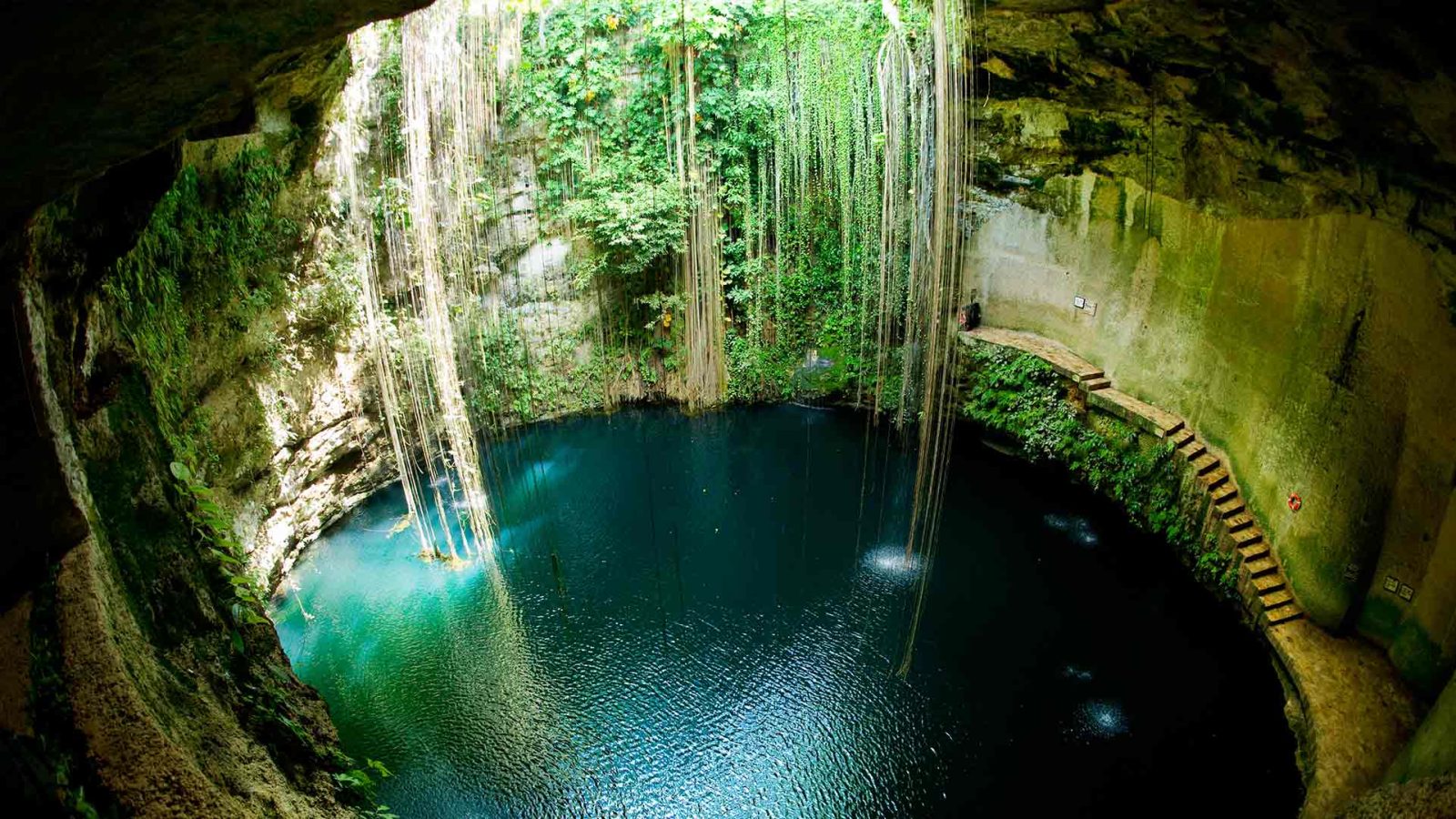
A cenote is a natural water deposit formed when the ceiling of a cave collapses, allowing underground aquifer water to be exposed to the surface. These natural formations are typical of the Yucatán Peninsula in Mexico, and the term “cenote” comes from the Maya word ts’ono’ot or d’zonot, meaning “water cave.” Their natural beauty and crystal-clear waters attract thousands of visitors each year, and they are also a vital resource for the region’s ecosystem and communities.
Cenotes are formed through the natural dissolution of limestone, a process that takes thousands of years. The Yucatán Peninsula is primarily composed of limestone, a porous rock that allows rainwater to filter through easily. Over time, the slightly acidic rainwater, as it passes through the earth and mixes with carbon dioxide from the soil, dissolves the limestone, creating large cavities and underground tunnels.
This erosion process gradually weakens the ceilings of these cavities until they eventually collapse, leaving an open or semi-exposed water pit known as a cenote. This phenomenon is especially common in areas where the groundwater levels are high and the geological structure facilitates the formation of interconnected cave networks.
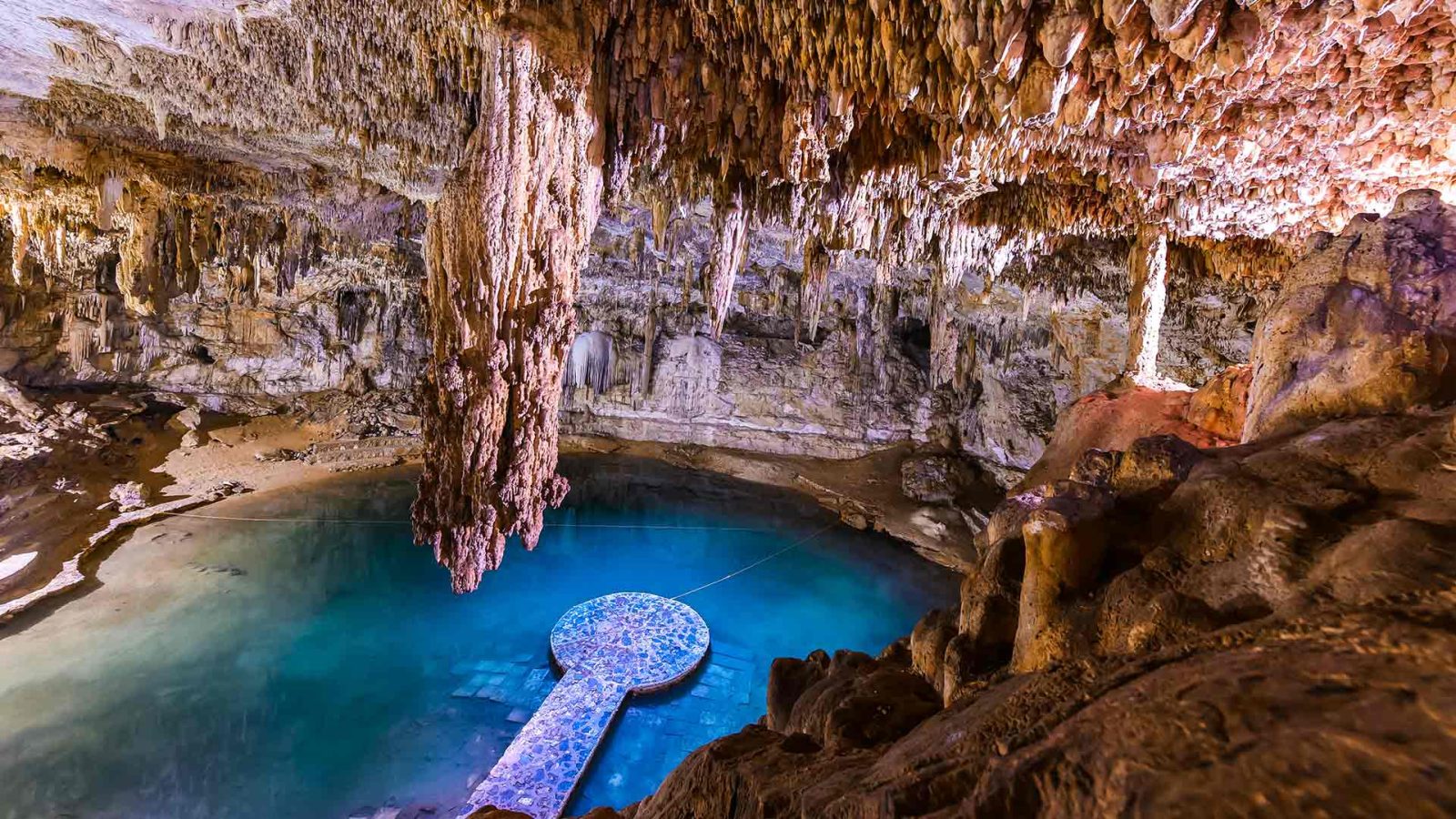
The variety of cenotes depends on their level of exposure: some are fully open to the outside, while others remain partially covered, preserving their cave-like structures. Fully enclosed cenotes, also known as cave cenotes, tend to be better preserved, but all types of cenotes share the same basic geological formation. Additionally, these formations are often interconnected, creating a network of aquifers that allows for the exchange of water and marine life, enhancing the region’s biodiversity.
Cenotes are formed over thousands of years through a natural process that begins with the dissolution of limestone across extensive underground networks of caves. Over time, erosion weakens the ceiling of these caves until it eventually collapses, revealing a water-filled pit exposed to the surface. These collapsed areas, known as cenotes, are interconnected by tunnels that link different cenotes to create vast underground water systems. In many cases, these systems extend all the way to the sea, linking different ecosystems, both subterranean and marine.
The variety of cenotes depends on the degree of their exposure: some are fully open to the outside, while others remain partially covered, retaining their cave-like structure. Fully enclosed cenotes, also known as cave cenotes, tend to be better preserved, but all types share the same fundamental geological formation. Additionally, these formations are often connected, forming an aquifer network that facilitates the exchange of water and marine life, enhancing the biodiversity of the region.
Cenotes are true natural sanctuaries that house invaluable flora and fauna. These underwater ecosystems are not only crucial for maintaining the region’s biodiversity, but they also connect with other habitats such as jungles, mangroves, and even the Mesoamerican Reef. Furthermore, cenotes provide vital fresh water to communities in the Yucatán Peninsula, supporting agricultural and livestock industries.
In ancient times, cenotes had a significant spiritual and cultural value. The Maya regarded cenotes as portals to the underworld and performed rituals and sacrifices in honor of their gods, as they believed cenotes connected them to their ancestors and the spirit world. Today, preserving these cenotes is essential because they are fragile structures that can easily be damaged by contamination or over-exploitation of the water resources.
The Yucatán Peninsula is renowned for its abundance of cenotes, and this region is home to some of the world’s most spectacular cenote formations. In the Riviera Maya, located in the state of Quintana Roo, cenotes offer a unique tourist attraction where visitors can swim in millennia-old waters surrounded by stunning stalactites and stalagmites.
Some of the most popular cenotes in the Riviera Maya include Cenote Ik’Kil, known for its breathtaking beauty and popularity among visitors; the Sacred Cenote of Chichén Itzá, which holds great archaeological and historical value; and Cenote Dos Ojos, famous for its crystal-clear waters and excellent opportunities for diving. Other recommended cenotes include Cenote Verde Lucero, Cenote Siete Bocas, and Cenote Kin Ha.
For those wishing to explore the natural beauty of cenotes and immerse themselves in Maya culture, Bahia Principe Tours offers tailored experiences that allow travelers to visit these unique sites. Bahia Principe Hotels & Resorts in the Riviera Maya provide the ideal combination of luxury and comfort, along with the opportunity to discover and appreciate the natural and cultural heritage of the cenotes and the Maya civilization in a paradisiacal setting.
The Bahia Principe hotels located in Riviera Maya offer a unique opportunity to experience a holiday packed with culture and spectacular landscapes. What’s more, you’ll find five star all-inclusive resorts that offer all the comforts you look for on a holiday: spa, a la carte restaurants and entertainment. Whether you’re travelling with your family, with friends or with a partner, you’ll find the right accommodation option for you: a stone’s throw from the beach or surrounded by luxury and the Mayan jungle… Whatever you’re looking for, you’ll find it here.
