The Queen Conch of Riviera Maya


The Riviera Maya, a stunning stretch of coastline along Mexico’s Yucatan Peninsula, is renowned for its pristine beaches, turquoise waters, and vibrant marine life. Beyond the mesmerizing coral reefs and playful dolphins, lies a fascinating creature that plays a vital role in the ecosystem: the queen conch. Join us as we delve into the world of this magnificent mollusk, exploring its habitat, characteristics, and the importance of its conservation!
What is the queen conch?
The queen conch (formerly known as Strombus gigas or Lobatus gigas) is a large sea snail, a marine gastropod mollusk belonging to the Strombidae family, also known as the true conchs. It is one of the largest mollusks native to the Caribbean Sea and is a herbivore. Revered for its impressive size, striking appearance, and ecological significance, the queen conch has captivated the imagination of scientists, conservationists, and nature enthusiasts alike.
Where is the queen conch found?
The queen conch is primarily found in the warm, shallow waters of the Caribbean Sea, the Gulf of Mexico, and the western Atlantic Ocean. Its range extends from Bermuda and Florida down to Brazil, with the highest concentrations found in the Bahamas, Turks and Caicos Islands, and the coasts of Mexico, including the Riviera Maya.
The ideal habitat for queen conch includes seagrass beds, sandy bottoms, and coral reefs, where they can find ample food and shelter. These diverse habitats are crucial for their survival, making the conservation of these areas paramount. The queen conch or Strombus gigas thrives in these warm waters, contributing to the overall health of the marine ecosystem.
What is the queen conch like?
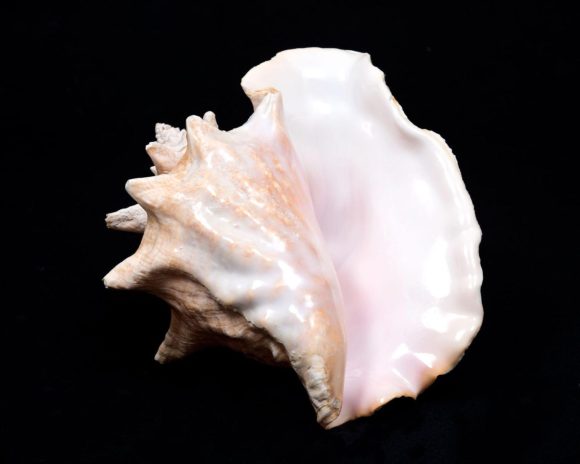
The queen conch is a truly remarkable creature, boasting a unique combination of physical characteristics and behavioral traits. Adult queen conchs can reach up to 12 inches in length and weigh up to 5 pounds. They have a distinctive, spiraled shell with a glossy, pink or orange interior. The exterior of the shell is typically covered in algae and other marine organisms, providing camouflage and further contributing to the conch’s integral role in the wildlife of Riviera Maya.
Shell of the queen conch
The shell of the queen conch is not just a pretty covering, it also serves as a home and a defense mechanism. The shell grows as the conch matures, adding new layers and increasing in size. A fully grown queen conch shell features a flared lip, which is a distinctive characteristic used to determine its age. The thickness of the lip indicates the conch’s maturity, with thicker lips signifying older individuals. The mesmerizing pink hue of the shell’s interior is a prized feature, making it a sought-after item for collectors and artisans. The beauty and complexity of the queen conch shell are truly a testament to the wonders of nature.
The queen conch moves by extending a strong foot and pulling itself along the seafloor. They are relatively slow-moving creatures, but their ability to burrow into the sand helps them evade predators and seek refuge during storms. Their diet consists primarily of algae and seagrass, which they graze on using a specialized feeding structure called a radula. Queen conchs are also known to be social animals, often congregating in large groups, especially during mating season. If you are lucky, diving or snorkeling in Riviera Maya might give you the chance to observe these fascinating animals. Knowing that excessive demand has generated fishing effort and harvest rates generally higher than fishery resources can support, according to the National Fisheries Institute.
Unfortunately, the queen conch population has suffered a sharp decline in recent decades due to overfishing, habitat loss, and environmental pressures like coastal development and pollution. To address this, conservation efforts such as fishing regulations, habitat restoration, and public education have been implemented. Supporting sustainable practices, like respecting size limits, seasonal closures (from May 1 to November 30), and avoiding unsustainable conch products, is essential to protecting this iconic marine species. Visitors can contribute by making informed choices and supporting local initiatives.
Staying at our hotels in Riviera Maya offers a unique opportunity to appreciate the queen conch in its natural environment. With easy access to pristine beaches and guided snorkeling or diving excursions, guests can witness the beauty of this remarkable species while learning about the local efforts to protect it.

The queen conch of Riviera Maya is a treasure worth protecting. Its beauty, ecological importance, and cultural significance make it an integral part of the region’s natural heritage. By understanding the threats it faces and supporting conservation efforts, we can help ensure that this magnificent mollusk continues to thrive in the warm waters of the Caribbean Sea. As you plan your visit to the Riviera Maya, we encourage you to explore the wonders of its marine life and discover the magic of the queen conch.


