The black spiny-tailed iguana of the Riviera Maya


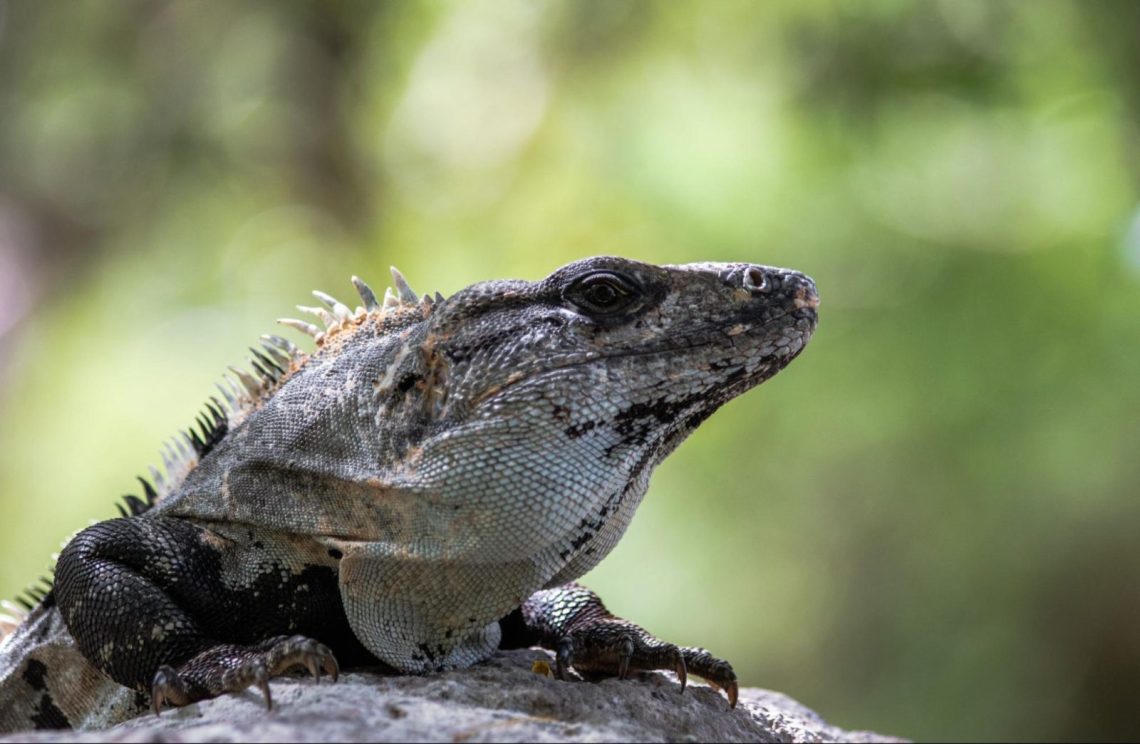
The Riviera Maya is a natural paradise where biodiversity thrives in every corner. One of the most fascinating inhabitants of this region is the black spiny-tailed iguana, also known as Ctenosaura similis or striped iguana.
In this article, we will explore what this species is, where it can be found, and the features that make it unique—focusing especially on its distinctive colors.
What is the black spiny-tailed iguana?
The black spiny-tailed iguana is a species of lizard belonging to the Iguanidae family. Its scientific name, Ctenosaura similis, reflects both its distinctive appearance and its natural habitat. The black iguana is highly adaptable, thriving in a range of ecosystems—from humid jungles to more arid regions—making it a truly versatile species.
Within the animal kingdom, black spiny-tailed iguanas stand out for their longevity and resilience. They can live up to 20 years in the wild, showcasing a remarkable ability to withstand changing environmental conditions. Their omnivorous diet, which includes both plants and insects, allows them to survive in diverse habitats, from coastal areas to forested zones.

Where is the black spiny-tailed iguana found?
The black spiny-tailed iguana is native to Central America and is distributed along the Pacific coast, from southern Sinaloa in Mexico down to the Isthmus of Tehuantepec. In the Riviera Maya, you can often find these iguanas basking in the sun in rocky beach areas, archaeological sites, and forested zones near rivers and cenotes. Their preference for warm, sunny locations makes them highly visible during the day, especially in areas with plenty of rocks and vegetation where they can hide or escape from predators if needed.
Visitors staying at our hotels in Riviera Maya are often delighted to encounter these impressive reptiles while walking through natural trails or relaxing near tropical gardens. These spontaneous encounters offer an authentic connection with the local fauna and a memorable experience of observing wildlife up close.
In addition to its physical attributes, the black spiny-tailed iguana is also known for its territorial behavior and social hierarchy, particularly among males. They are diurnal animals, most active during daylight hours, and tend to return to the same resting spots each day. Their adaptability, intelligence, and striking appearance make them a fascinating species to observe in their natural environment.
What is the black spiny-tailed iguana like?
The black spiny-tailed iguana is a species of lizard within the Iguanidae family, widely found in tropical regions across the Americas. Its scientific name, Ctenosaura similis, refers both to its spiny-scaled tail and its similarity to other species in the same genus. It’s also known as the striped iguana, due to the light-colored bands that often run along its body.
This reptile can grow up to 1.2 meters long, including its tail, making it one of the largest iguana species in its range. Its body is built for agility, allowing it to navigate rocky terrain and dense vegetation with ease thanks to its strong limbs and sharp claws. Its long, spiny tail serves a defensive purpose—when threatened, it can whip its tail to deter potential predators.

Colors of the black spiny-tailed iguana
One of the most striking features of this species is its coloration. Its body is predominantly black, with irregular patches of yellowish white. This visually striking combination also helps the iguana camouflage within its natural environment, protecting it from predators. The head, always black, is a distinguishing feature compared to other iguanas that show more varied tones.
The intensity and distribution of colors can vary depending on the iguana’s age, sex, and health. Juveniles often have brighter and more contrasting colors, while adults tend to display more muted tones. Additionally, the pattern of spots on their body is unique to each individual, making this species especially interesting for those enjoying the wildlife of the Riviera Maya.
When feeling threatened, the iguana may darken its coloration as a defensive mechanism, making it harder to detect. Subtle color changes also serve as signals between individuals, expressing dominance, mood, or mating readiness.
At Bahia Principe, we are committed to the conservation of local wildlife by implementing responsible tourism practices and supporting research projects focused on protecting key species within the regional ecosystem. These efforts aim to preserve not only the black spiny-tailed iguana, but also many other creatures that form part of the area’s vital ecological balance.
The black spiny-tailed iguana is undoubtedly one of the natural treasures of the Riviera Maya. Its presence reinforces the importance of protecting and respecting the habitats that sustain such unique species. Observing it in the wild is an experience that connects us to the rich natural heritage of the Mexican Caribbean—where every encounter with local wildlife offers a chance to learn and appreciate the world around us.


