History of the Mayan Ruins in Tulum Mexico | Bahia Principe



Autor:

Compartir
Leave behind your worries and routines when you visit the Riviera Maya. Among the many wonders of this region, the Tulum ruins offer an extraordinary journey back to the ancient Mayan civilization. Located on the Caribbean coast, the archaeological site of Tulum stands out as one of the few ancient cities built right along the shoreline, creating a truly unique landscape of Mayan structures against turquoise waters.
The ancient city of Tulum, meaning “Wall” in Mayan, was originally known as Zamá, or “Sunrise.” Tulum’s breathtaking views of the rising sun over the Caribbean are a fitting tribute to its original name. Built around 900 years ago, Tulum was a thriving center of commerce, evidenced by the diverse artifacts found on-site that originated from far-reaching regions of Mesoamerica.
Tulum served as a fortified city to protect its inhabitants from both land and sea threats. By sea, the coral reef just off the coast posed a natural defense, making it difficult for enemy boats to approach. On land, Tulum was surrounded by walls standing between 3 and 5 meters high, with a thickness of up to 6 meters, creating a formidable defense system for the ancient Mayans.
The city remained an active settlement until the arrival of the Spanish in the early 16th century. By 1841, explorers ventured into what remained of the site, hidden within the lush jungle. Today, the Mayan ruins of Tulum attract visitors from around the world who are eager to learn more about this unique blend of history and natural beauty.
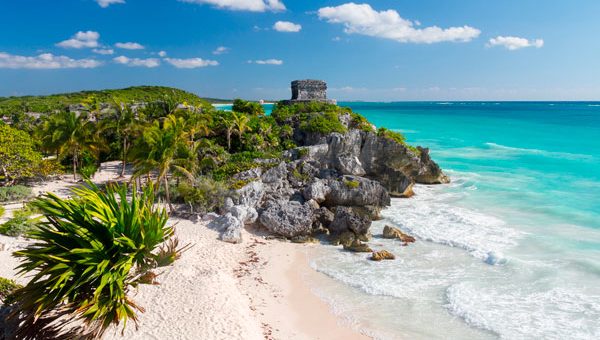
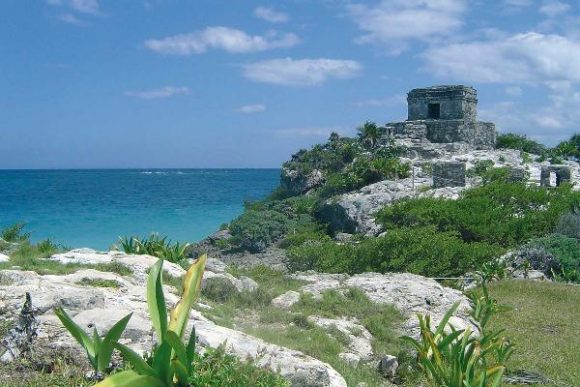
The Tulum archaeological site is set on high cliffs overlooking the Caribbean Sea, creating a dramatic view that’s unlike any other Maya ruins. The juxtaposition of ancient stone structures with white-sand beaches and clear blue water is truly remarkable.
Some of the main highlights within the site include:
– El Castillo (The Castle): Perched on the edge of the cliff, El Castillo is the largest and most iconic structure in Tulum. It is believed to have been a lighthouse and a lookout point for approaching boats, helping guide them safely through the coral reef.
– The Temple of the Frescoes: This building showcases well-preserved murals depicting Mayan gods and religious scenes, offering insight into the ceremonial importance of Tulum.
– The Temple of the Descending God: Named for a unique figure depicted descending headfirst, this temple is believed to be dedicated to the “Descending God,” a significant deity in Mayan mythology.
Each of these structures offers a glimpse into the spiritual and ceremonial life of the Mayans, as well as their architectural expertise.
The architecture of Tulum ruins reflects traditional Mayan architectural styles, adapted to suit this coastal site. The walls and temples are made of limestone, a material abundant in the region, and demonstrate the Maya’s skill in creating structures that could endure time and the elements. Each building showcases detailed stone carvings, paintings, and glyphs that provide clues to Tulum’s history and cultural significance.
Planning a visit to Tulum’s archaeological site is essential for those interested in Mayan history and ancient civilizations. The site offers guided tours where experts share insights into the daily lives of the Maya and the site’s historical significance. Visitors should also take time to enjoy the unique combination of beach and ruins—Tulum is the only Mayan city built directly by the sea, making it a singular experience.
To make the most of your visit to Tulum’s ruins, here are some tips:
– Visit early: Arriving early in the day allows you to see the ruins at sunrise, avoid the midday heat, and enjoy fewer crowds.
– Bring a camera: Tulum offers unparalleled photo opportunities with its cliff-top ruins overlooking the Caribbean Sea.
– Snorkeling and diving: Don’t miss out on exploring the coral reefs near Tulum, home to diverse marine life. For an adventurous experience, you can also visit nearby cenotes—natural wells popular for diving and snorkeling.
– Sian Ka’an Biosphere Reserve: Extend your trip with a visit to this nearby UNESCO World Heritage Site, home to an incredible range of wildlife, including tropical birds, manatees, and sea turtles.
No visit to Tulum is complete without immersing yourself in both its historical ruins and the surrounding natural beauty. Whether you’re drawn to its ancient Maya ruins or the beautiful Caribbean waters, Tulum is a destination that will leave you inspired.

